Founder, SEOcalibre · 6 min read · SEO Basics
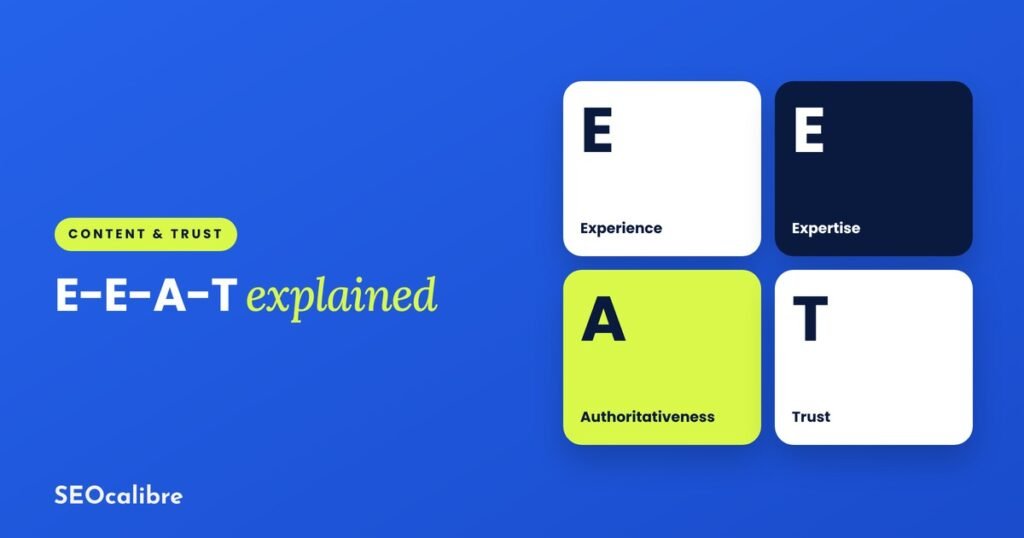
E-E-A-T stands for experience, expertise, authoritativeness and trust. It comes from Google’s search quality guidelines, and it shapes how people evaluate whether content deserves to be believed. This article explains what E-E-A-T is, what it is not, and the practical steps that make a site more credible to readers, search systems and AI tools.
Key takeaways: E-E-A-T is a framework for judging content quality, not a single ranking factor. Trust is the most important part. Show real experience, name real authors, cite sources and keep content current. Credibility matters even more for health, finance and legal topics.
What E-E-A-T is, and what it is not
Google’s quality raters use E-E-A-T to evaluate whether results are helpful and reliable. It is not a score you can see or a switch you can turn on. Google’s ranking systems use many signals that align with these qualities, so improving how credible your content is tends to support performance without being a guarantee.
Experience
Experience means first-hand knowledge. A review written by someone who used the product, or a guide written by someone who has done the work, usually offers more than a summary of other sources.
- Include original photos, screenshots, data and case notes.
- Describe what you did, what happened and what you would change.
- Avoid generic text that could have been written without any real involvement.
Expertise
Expertise is the depth of knowledge in a subject. For many topics, everyday expertise is enough. For topics that affect health, money or safety, formal qualifications matter more.
- Show author credentials and relevant background.
- Have qualified reviewers check sensitive content and show their names.
- Explain concepts accurately and acknowledge uncertainty.
Authoritativeness
Authoritativeness is about reputation. It reflects whether others recognize you as a go-to source on a topic. Mentions, citations, reviews, interviews and links from respected sites all contribute.
Trust
Trust is the foundation of the framework. A trustworthy site is accurate, transparent and safe to use.
- Show who runs the site, with clear contact details.
- Publish privacy, terms and correction policies.
- Cite reliable sources and link to them.
- Use secure connections and avoid misleading layouts.
- Keep pricing and claims honest.
Pages that need the most care
Google applies higher standards to topics that could affect a person’s health, finances or safety. For healthcare, legal, finance and insurance sites, build review workflows, dated updates and clear sourcing into every page.
A practical E-E-A-T checklist
| Area | What to do |
|---|---|
| Authors | Create author pages with real credentials and link articles to them |
| Evidence | Add original data, examples and screenshots |
| Sources | Cite reputable sources and keep facts current |
| Reviews | Collect and respond to genuine customer reviews |
| About and contact | Explain who you are and how to reach you |
| Updates | Show last-reviewed dates and fix outdated content |
E-E-A-T and AI search
AI tools such as Google AI Overviews, ChatGPT and Perplexity prefer sources they can verify and describe accurately. Clear authorship, consistent facts across the web and independent mentions make it easier for these systems to recognize and cite you. Entity markup such as Organization and Person schema can support this, as long as it matches visible content.
Example: strengthening a service page
Imagine a page for a tax advisory service. The weak version has anonymous copy, vague promises and no proof. The stronger version identifies the advisor, explains how the service works and shows evidence.
| Element | Weak version | Stronger version |
|---|---|---|
| Author | None | Named advisor with credentials and a profile link |
| Claims | Best advice guaranteed | Clear scope, process and limits of the service |
| Evidence | None | Client situations described with permission, plus sources |
| Trust | No contact details | Address, phone, privacy and terms linked in the footer |
| Updates | Undated | Last reviewed date shown |
How to audit your own E-E-A-T
- List the ten pages that matter most for your business.
- Check whether each page names a real author or reviewer.
- Look for claims that lack a source, and add one or remove the claim.
- Compare each page with the best result for the same query and note what it shows that you do not.
- Review your About, Contact and policy pages for clarity.
- Search for your brand and see how reviews, profiles and mentions describe you.
Building credibility over time
Credibility is cumulative, so treat it as a habit instead of a one-off project. Each month, publish or update one page that shows real experience, add a named reviewer to one sensitive page, request genuine reviews from recent customers and look for one relevant publication, association or partner that could mention your work. Keep a simple log of what you changed and when. Over several months, the log shows which improvements correlate with better visibility and engagement, and it gives you evidence you can share with stakeholders, without claiming that any single change caused the result.
What not to claim
Avoid stating credentials you do not hold, using testimonials you cannot verify or implying endorsements that do not exist. Claims that cannot be checked weaken trust the moment a reader or reviewer tests them. When you are unsure, describe what you actually did and let the evidence speak for itself.
Common E-E-A-T mistakes
- Publishing anonymous content on sensitive topics.
- Using made-up authors or inflated credentials.
- Copying competitor content and rewording it.
- Burying contact information.
- Leaving old, inaccurate pages live.
Final thoughts
There is no shortcut to credibility, and that is the point. The sites that earn trust are usually the ones that are honest about who they are, what they know and what they can and cannot do. Start with your most important pages, improve them properly, and expand from there as your evidence grows.
Frequently asked questions
Is E-E-A-T a ranking factor?
Not directly. It is a framework used to evaluate quality, and many of its signals align with what ranking systems reward.
Do all sites need author bios?
They help most on topics where expertise matters, but they are good practice for any editorial content.
Can a small business show E-E-A-T?
Yes. First-hand experience, honest reviews and transparent business details are available to any business.
How long does it take to build authority?
It builds gradually as you publish useful content and earn independent mentions.
Can SEOcalibre help?
Yes. Our Content and E-E-A-T service covers author signals, content planning and review workflows.
Sanket Ankushrao is the founder of SEOcalibre, with 6+ years of hands-on SEO experience across technical SEO, content, local SEO and AI search. Read more
Preferred sources apply to Top Stories results in Google Search. Availability depends on your Google account and region.
Related services
On-Page & Website Optimization
Optimize pages, content, internal links and structure around the searches that matter.
Content & E-E-A-T
Useful, trustworthy content that demonstrates expertise, builds authority and answers real questions.
Technical SEO & Website Audit
Improve crawlability, indexation, performance, site structure and technical foundations.